

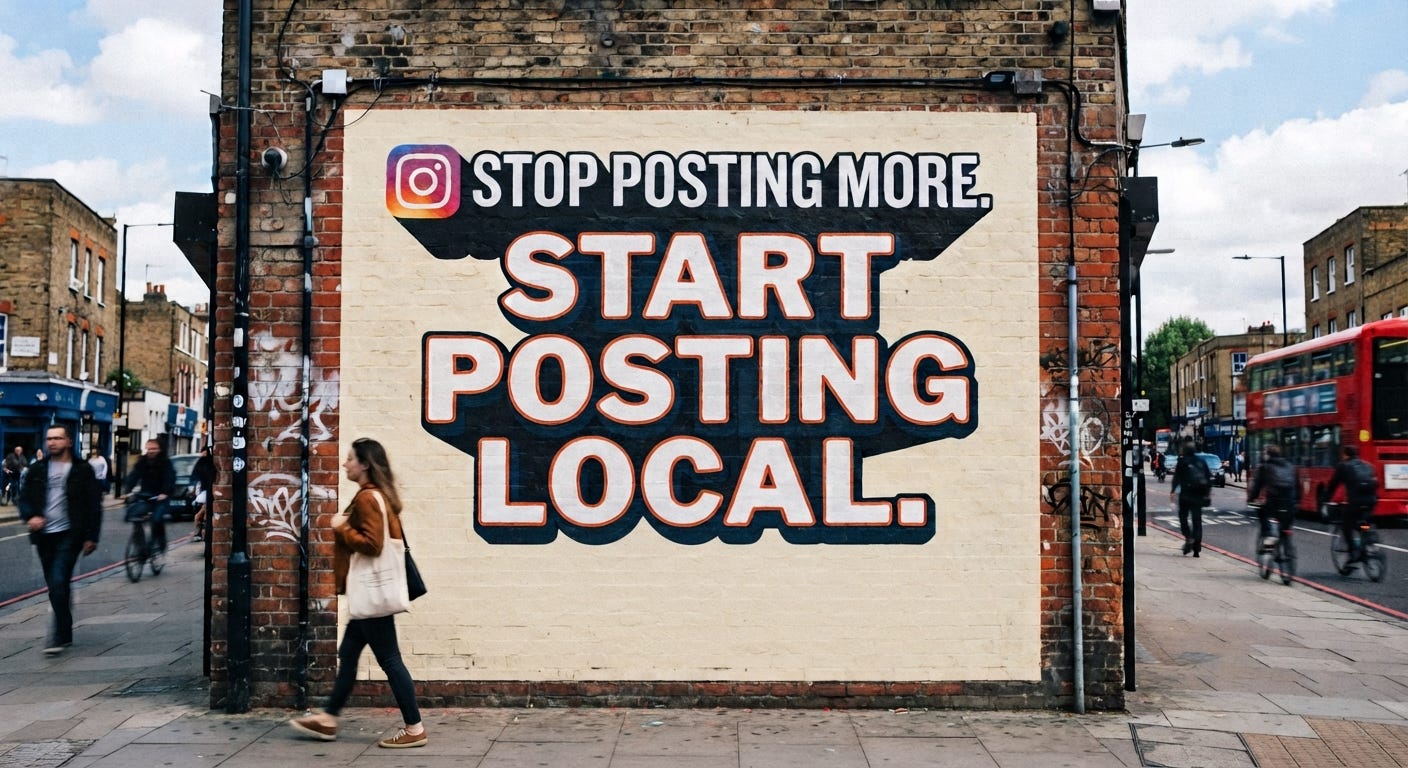
If your nonprofit’s Instagram plan is “post more,” I have good news: you can stop. The accounts that turn followers into volunteers, donors, and partners aren’t louder. They’re clearer. They show local people doing real work, tell one story at a time, and make the next step easy.
Here’s the system I’d use.
Start with one goal
Instagram should serve a practical local outcome, not just collect likes. Pick one primary goal per campaign or quarter:
Recruit volunteers for a workday, cleanup, or food distribution
Fill seats at a workshop, public meeting, or fundraiser
Grow an email list you own
Raise small-dollar gifts for a specific, time-bound need
Attract local sponsors, in-kind donors, or institutional partners
Everything you post should pull in that direction.
Be specific about place
Your biggest advantage as a local organization is that you have a physical location. Use it.
Compare these two posts:
“We believe everyone deserves access to green space.”
“On Saturday, 26 neighbors planted 42 drought-tolerant trees along East Palm Canyon Drive. Here’s what that means for shade, walkability, and the people who use this corridor every day.”
The second one is visual, credible, and shareable, and a stranger could picture themselves showing up. Show the block, the park, the garden, the storefront, the volunteer. Mission statements can live on your website.
Build a simple content system
You don’t need a fresh idea every Monday. You need a handful of repeating categories:
Impact proof: before-and-afters, results, numbers. “This vacant strip is now a native-pollinator garden.”
Human stories: a volunteer or resident explaining why they show up.
Practical education: “Three ways street trees cool our neighborhood blocks.”
Behind the scenes: unloading plants, setting up tables, the team check-in.
Invitations: one clear ask, tied to one clear date.
Community recognition: thank the businesses, schools, and volunteers who make the work possible.
Real beats polished here. A shaky, honest video of volunteers unloading plants will often outperform a slick promo, because it looks like the work actually looks.
Give each format a job
Reels are for reach. They put your work in front of people who don’t follow you yet. Open with motion, a face, or a striking visual in the first few seconds. Formats that work: transformations (”This corner, 60 days ago”), a day in the field, a local problem explained, one person and their reason for volunteering, or three reasons to join Saturday.
Carousels are for making the case. When you need to explain rather than inspire, use a carousel. Think of it as a tiny briefing for a future volunteer or donor: a strong first slide, a clear progression, and a final slide that tells people what to do. Not a bulletin board crammed with text.
Stories are for trust. Polls, question stickers, countdowns, volunteer shout-outs, and reposts from partners keep your existing community warm. Save the best ones as Highlights: Start Here, Volunteer, Impact, Events, Programs, Partners, Donate.
Make your profile do the converting
Someone who loves one Reel will land on your profile and decide in seconds whether to stay. Make it easy:
A recognizable logo or friendly face
A name field with local search terms, like “Desert Neighborhood Greening | Palm Springs”
A plain-language bio covering mission, place, and audience
One link to a mobile-friendly page with options to donate, volunteer, register, and subscribe
Three pinned posts: What we do, How to get involved, and a current campaign or impact story
Let local discovery work for you
For community organizations, discovery is geographic and relational:
Use natural local language in captions: neighborhood names, parks, corridors, schools, event names
Tag locations when it adds value
Invite partners (businesses, schools, neighborhood groups, city departments) to use the Collaborator feature, so posts show up for both audiences
Use a few relevant hashtags, not a pile of generic ones
Comment thoughtfully on other local accounts
Encourage volunteers to post their own take, then reshare with permission
One post, one action
The most common mistake is telling a great story and then leaving people with nothing to do. Give every post one low-friction ask:
“Save this for your next neighborhood walk.”
“Comment VOLUNTEER, and we’ll send the link.”
“Tag a local business that should join us.”
“Give $25 to supply one resident-led garden kit.”
Just don’t ask people to donate, volunteer, subscribe, attend, follow, and share in the same caption. Pick one.
Measure what matters
Follower count is a vanity metric unless the right people are showing up. Each month, check:
Reach and Reel views for discovery
Shares and saves for usefulness
Comments and DMs for relationship strength
Profile visits for interest
Link clicks, registrations, volunteer applications, sign-ups, and gifts for conversion
A Reel with 2,000 views that produces nothing is less valuable than a carousel with 350 views that brings in six volunteers. Make more of the second kind.
A weekly plan for a lean team
Monday: a 20-45 second Reel (fieldwork, a transformation, or a human voice)
Wednesday: a carousel explaining one outcome or local issue
Friday: an invitation post tied to one concrete action
All week: Stories from the real work, a poll or question, and partner reposts
Once a month: review what moved a real goal, then do more of it
If that’s too much, two strong posts a week beat a frantic burst followed by silence.
The bottom line
The durable strategy isn’t chasing trends. It’s using Instagram as a visible, ongoing record of community trust: show the work, credit the people, explain the stakes, and make it easy to join in.