

We ran two workdays recently and got people to them in very different ways.
For the first, we did the asking ourselves. We posted the event in our Facebook Group (300 members) and sent it to our newsletter (401 subscribers). Facebook brought zero RSVPs. About 60% of our subscribers open what we send, and about 20% of those RSVP'd, so roughly 48 people said yes by email.
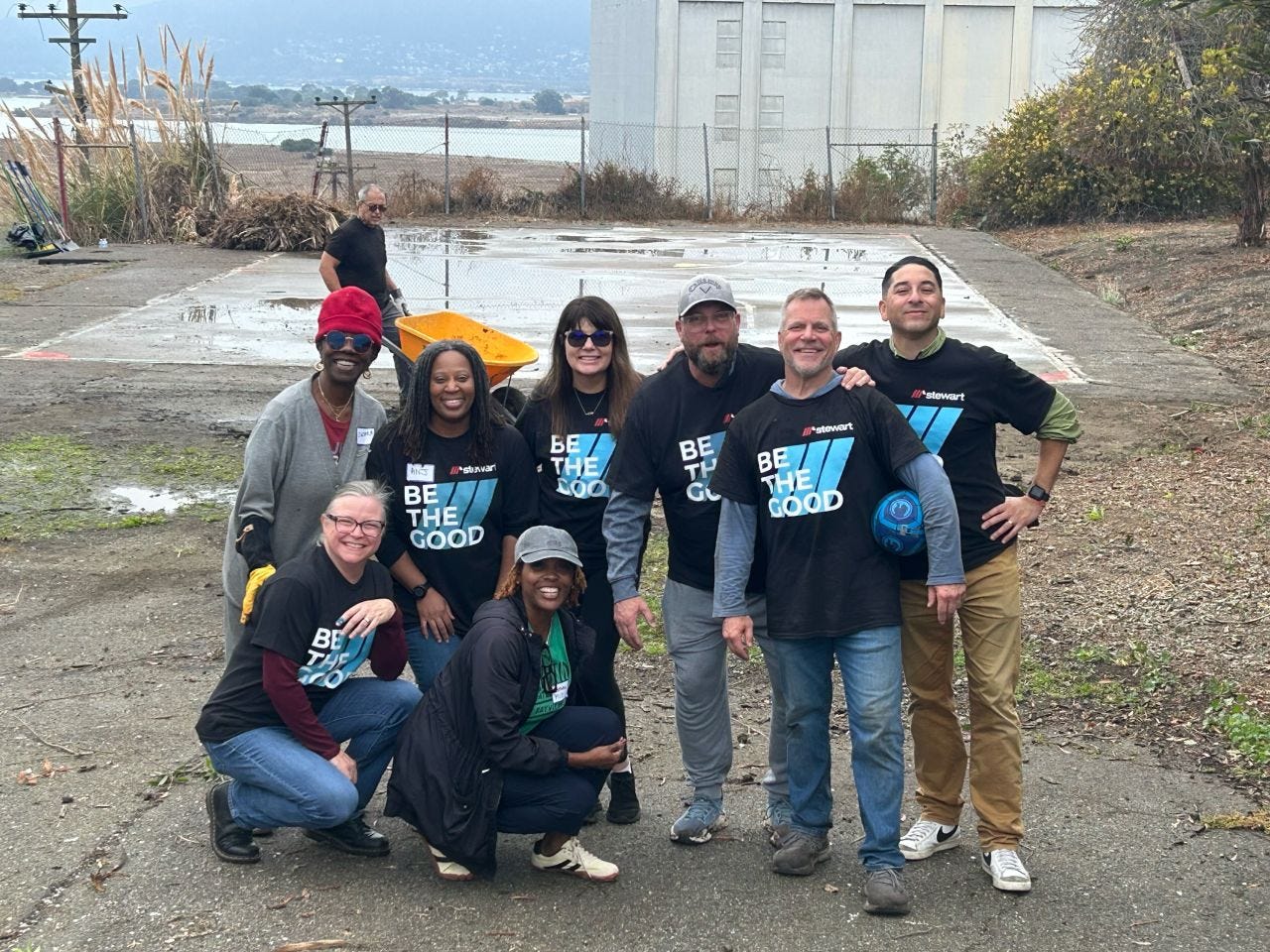
For the second, someone else did the asking on October 23. Rebuilding Together San Francisco arranged for a team from Stewart Title to join us and promoted the day to its own network. Fifteen people showed up to clear an overgrown basketball court at Mariners’ Village Park, mostly from the Stewart Title team, plus a few neighbors. By noon the weeds were gone, the trees were trimmed, and the trash was hauled out.
One yes can be fifteen people
I used to judge an invite by its RSVP rate. Now I pay more attention to who does the asking.
An open call needs hundreds of people to each decide, alone, to give up a morning. A corporate team has already decided. Someone inside the company said yes, put it on calendars, and the group arrived together.
We couldn’t have made that ask ourselves. Rebuilding Together had the relationship. A small group can’t build that kind of relationship quickly, but it can work with partners who already have it.
Email did better than Facebook for us, and I’ll keep using it. But the biggest single result came from a partner.
What I’m changing
Ask partners who they can bring. Give them the date, the work, and how many people you need, weeks ahead, with a short paragraph they can forward in a minute.
Thank them in public. Name them, link to them, tag them. It’s right, and it makes the next ask easier.
Keep email as the main invitation. Put the date, time, place, and RSVP link in the first two lines, and say what people will actually do.
Use Facebook as a pointer. A post that says “details and RSVP in our newsletter” sends members somewhere we own.
Ask every volunteer to subscribe before they go home. Someone who just had a good morning with you is the likeliest to say yes.
Add “How did you hear about this?” to the RSVP form. It takes five seconds.
The catch
A workday that leans on one partner is fragile. If their team is busy next quarter, you’re staring at an empty court. We want both: partners for volume, and our own list for the neighbors who’ll still be around after the team goes home.
Your turn
Look at your last two events. How did people hear about each one? Most groups have never counted.
Reply and tell me which approach filled your last workday. I’m collecting answers for a follow-up.
The partner route has one hidden cost: the fifteen arrive on the partner's list, not yours. Corporate volunteer days usually get signed up inside the company, so you end up with a headcount, not names. Worth asking the partner to send people through your own RSVP form. Then your "how did you hear about this" question gets an answer with a name attached.